Tongue Tie Services
Private Tongue Tie Assessment & Division
I will assess your baby’s tongue, mouth and palate and discuss the findings with you. I will be open and honest based on my professional judgement and experience as to whether I believe a tongue tie division would be beneficial or whether we could implement some additional feeding support to see if this rectifies the situation.
I am a member of the ATP
What is Tongue Tie or Restricted Lingual Frenulum (RLF)?
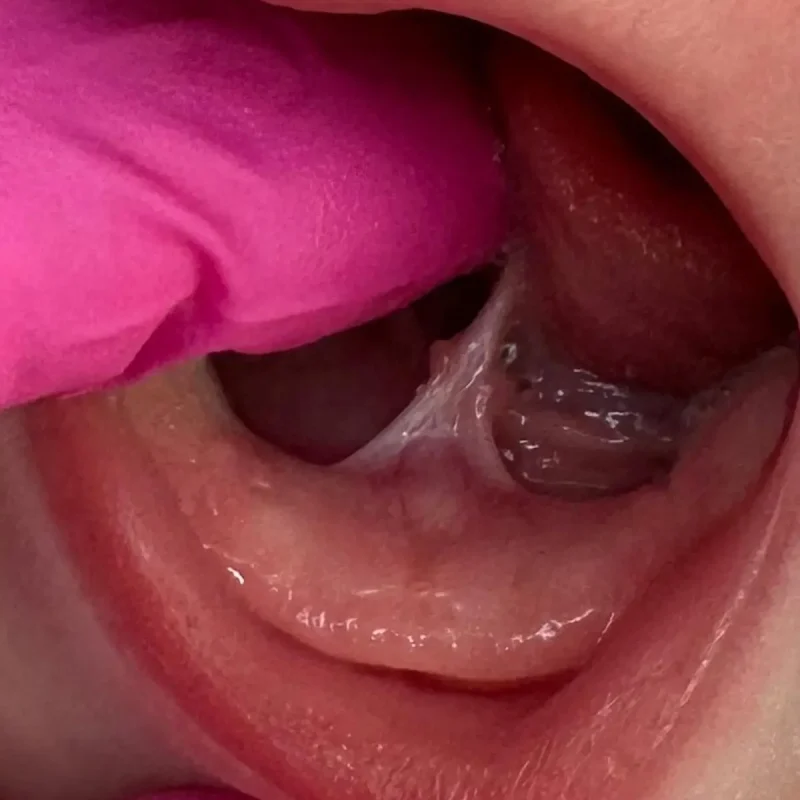
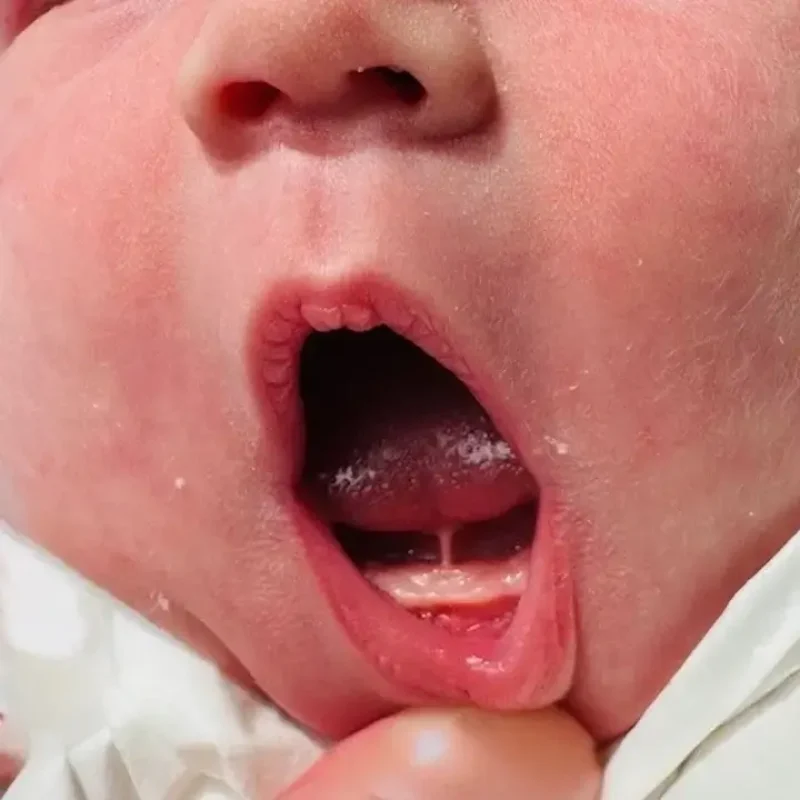
Tongue-tie, also known as ankyloglossia is a condition in which a person’s tongue remains attached to the floor of their mouth. This occurs when the lingual frenulum (a thin strip of tissue connecting your tongue and the floor of your mouth) is shorter than usual. A short frenulum can restrict your tongue’s movement.
Ankyloglossia is most common in newborns and young children. It is commonly associated with breastfeeding difficulties and it is also believed to have some impact on speech and/or oral hygiene problems. The true impact of tongue-tie on speech isn’t clearly understood. The child’s tongue needs contact with the roof of their mouth when pronouncing the lingual sounds “t”, “d”, “z”, “s,” “th,” “n,” and “l.” When their tongue is severely restricted and can’t reach the roof of their mouth, the child can have problems with articulation (pronunciation).
Tongue-tie is a congenital condition, which means people are born with it.
What are the symptoms of tongue-tie?
Symptoms of tongue-tie range from insignificant to significant meaning it either affects feeding or it doesn’t . Your child’s tongue may appear to be heart-shaped or may have a notch in it. It may also appear to be spade like and sit flat on the bottom of the mouth.
Newborn tongue-tie may result in:
- Difficulty latching when breastfeeding.
- Breastfeeding for extended periods of time.
- Falling asleep on the breast after only a few sucks/minutes
- Constant hunger.
- Trouble gaining weight.
- A clicking sound during feeding.
- If the baby is feeding from a bottle they may be dribbling and losing lots of the milk from the corners of their mouth.
If breastfeeding, in order to create an adequate seal, the baby must extend their tongue over their jaw line. If the baby has tongue-tie, this isn’t possible. They often attempt to use their gums to keep the nipple in their mouth during breastfeeding. This can be painful.
A woman may also have other symptoms related to the baby’s tongue-tie, including:
- Cracked, sore nipples.
- Pain during feeding.
- Insufficient milk supply due to poor milk transfer.
How is tongue-tie assessed and treated?
Assessment: During the appointment, I will take a history and then inspect the inside of your baby’s mouth under a good light source. I will physically assess the mobility and function of the tongue using the Hazelbaker assessment tool (hazelbaker.pdf) and discuss the findings with you. These appointments typically take between 60-90 minutes.
Treatment: I will perform a small surgical procedure where the lingual frenulum is divided using a pair of blunt ended scissors, specifically designed for this purpose. This is called a frenotomy (also known as frenulotomy, or tongue-tie division) and takes less than 5 seconds to complete. The procedure can be performed in either a clinic setting or in your own home.
Frenotomy causes minimal discomfort for infants and is done without the need for anaesthesia. Some parents may choose to give paracetamol prior to the procedure if the baby is old enough for over-the-counter medication.
How much does it cost?
Our Tongue Tie service is split into two parts:
- Assessment
- Division if needed
Assessment costs:
The assessment appointment costs £120 and is payable in advance.
- Review of anatomy of the baby’s mouth
- Full physical assessment of baby’s tongue function and mobility
- Review of feeding patterns, problems, weight, centile issues
- Attachment and positioning assessment to include feeding support
Division costs:
After the assessment, I will advise you on the best treatment. This may include division of the tongue tie. This is a small surgical procedure. Often, this can be done at the same appointment. Occasionally, a separate appointment is needed. There is an additional cost of £75-£125. The cost can vary depending on the type of procedure needed, the location of the appointment and the after care required. This is payable on the day.
- Division of the tongue tie
- Advice on aftercare, tongue exercises
- Development of a feeding plan if needed
- A copy of the clinical information for you to take away
- Follow up text 24 hours later
- Unlimited ongoing virtual support for 1 month
Mileage:
My consultation fees include a 20mile round trip expense from GL20 8. Any additional miles are charged at 50p/mile.
Vitamin K
Want To Chat Before Booking?
Want to chat before booking? No problem!
You can call me to discuss any queries before booking. Text Anna on 07974 137022 to request a call back.
Looking forward to hearing from you!